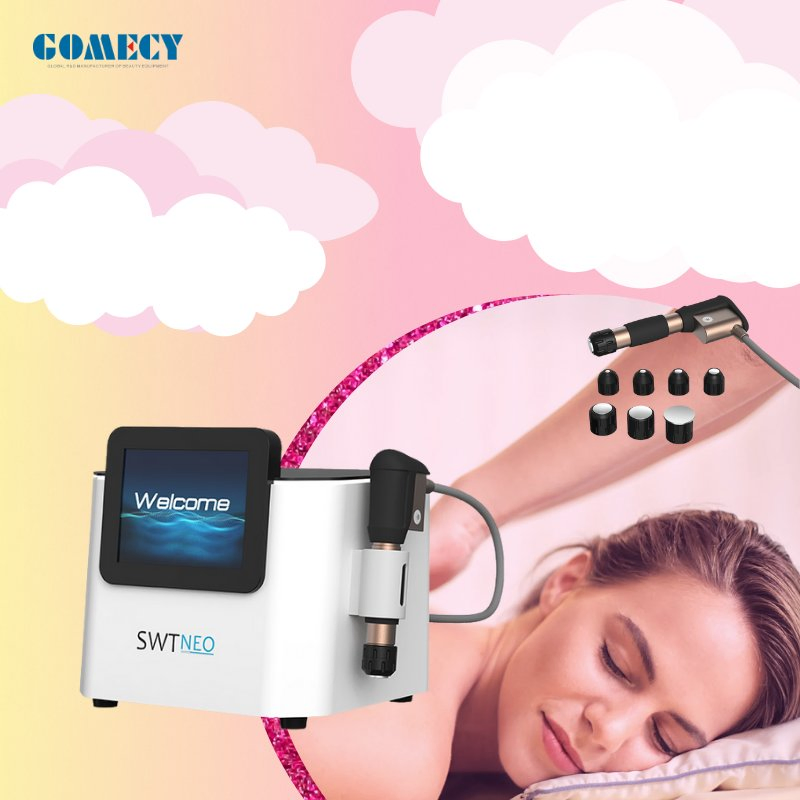
Pneumatic shockwave therapy is a non-invasive physical treatment technology that uses mechanically generated pressure waves to stimulate biological tissues. Unlike electrical or thermal methods, pneumatic shockwaves are produced through compressed air acceleration, creating high-energy mechanical impulses that can be precisely transmitted into muscles, fascia, tendons, and other soft tissues.
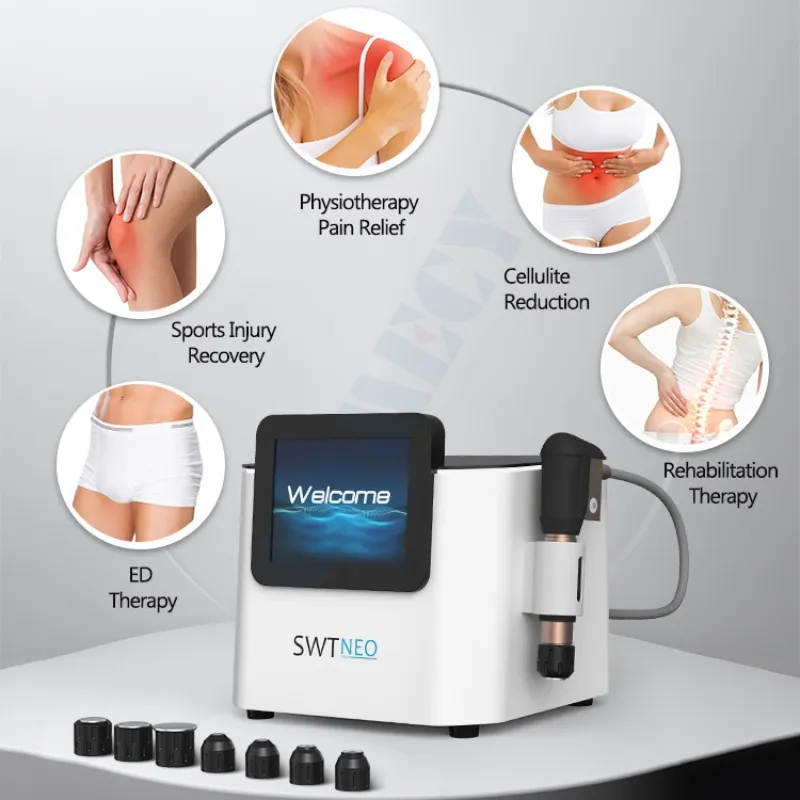
By delivering controlled mechanical vibrations directly to the treatment area, pneumatic shockwave therapy helps improve local blood circulation, enhance cellular metabolism, stimulate tissue regeneration, and reduce pain caused by chronic inflammation, soft tissue adhesion, or calcification.
Technology Principle
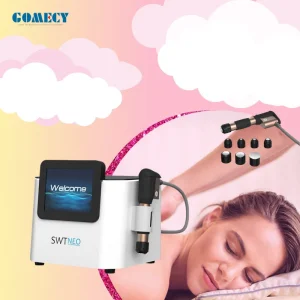
The SW267 Pneumatic Shockwave Therapy Device is designed based on the ballistic pneumatic shockwave principle. The system electronically regulates compressed air through a ballistic pressure compressor, which accelerates a projectile inside the handpiece. This creates a powerful mechanical impact transmitted through elastic collision to the treatment probe and directly into the tissues.
Application Scope
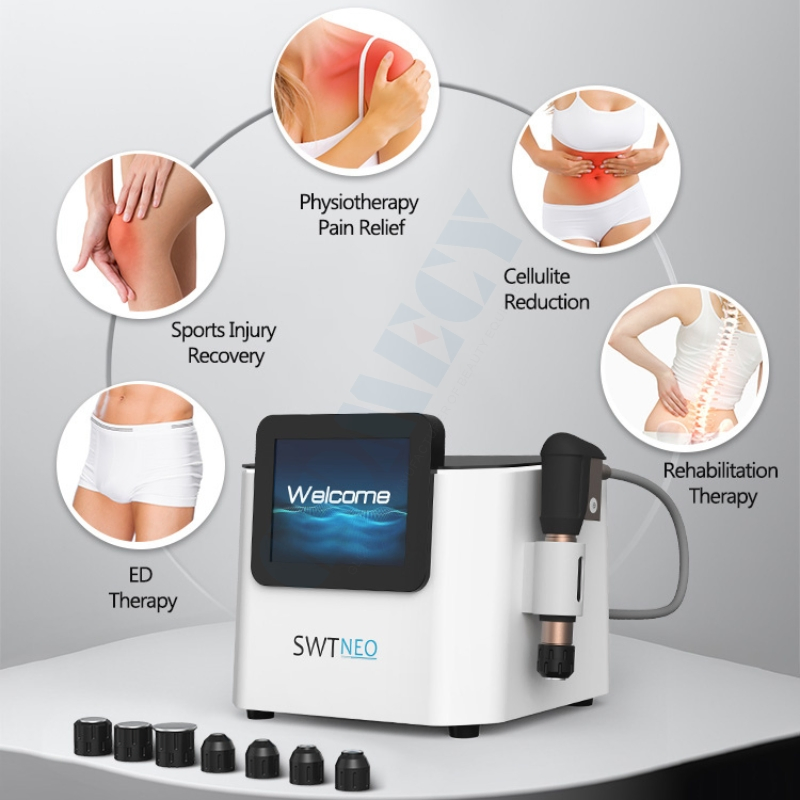
Physical Therapy & Rehabilitation
Orthopedics and sports medicine departments
Physiotherapy and pain management clinics
Urology and men's health therapy
Effective for muscles, fascia, tendons, and ligaments
Body Sculpting & Wellness
Disruption of stubborn fat clusters
Reduction of cellulite appearance
Activation of metabolism and lymphatic drainage
Improvement of skin texture and firmness
Erectile Function Support
Promotes angiogenesis (new blood vessel formation) and improves local circulation through non-invasive mechanical stimulation, supporting vascular health and spontaneous response.
Core Therapeutic Effects
Enhances cell membrane permeability
Stimulates cytokine production
Promotes vascular regeneration
Improves local blood circulation
Supports bone and tissue remodeling
Accelerates dissolution of calcified tissue
Stimulates collagen synthesis
Reduces tissue tension and stiffness
Provides rapid analgesic effects
Improves microcirculation efficiency
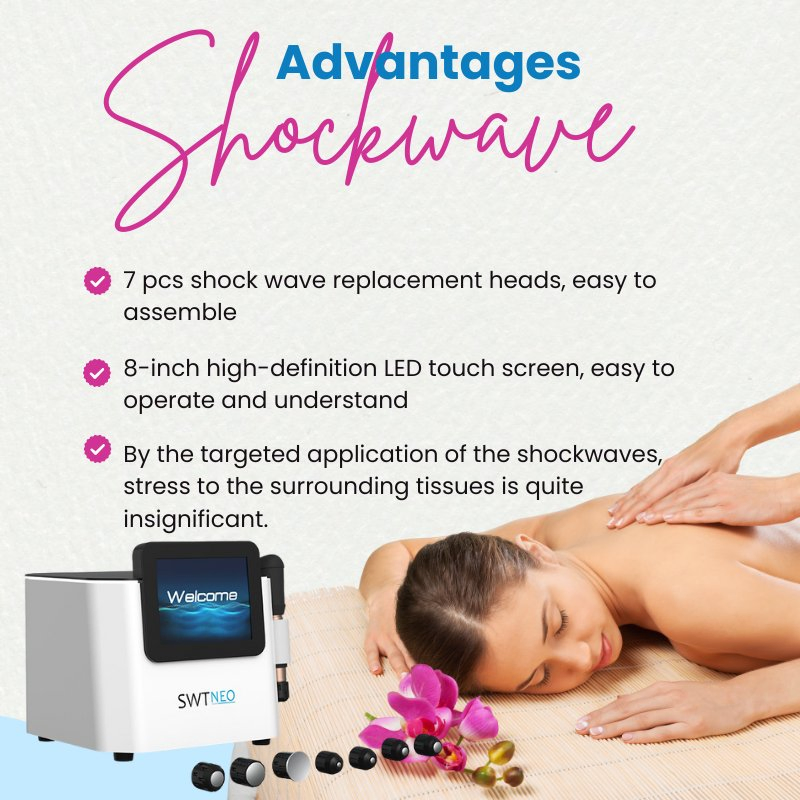
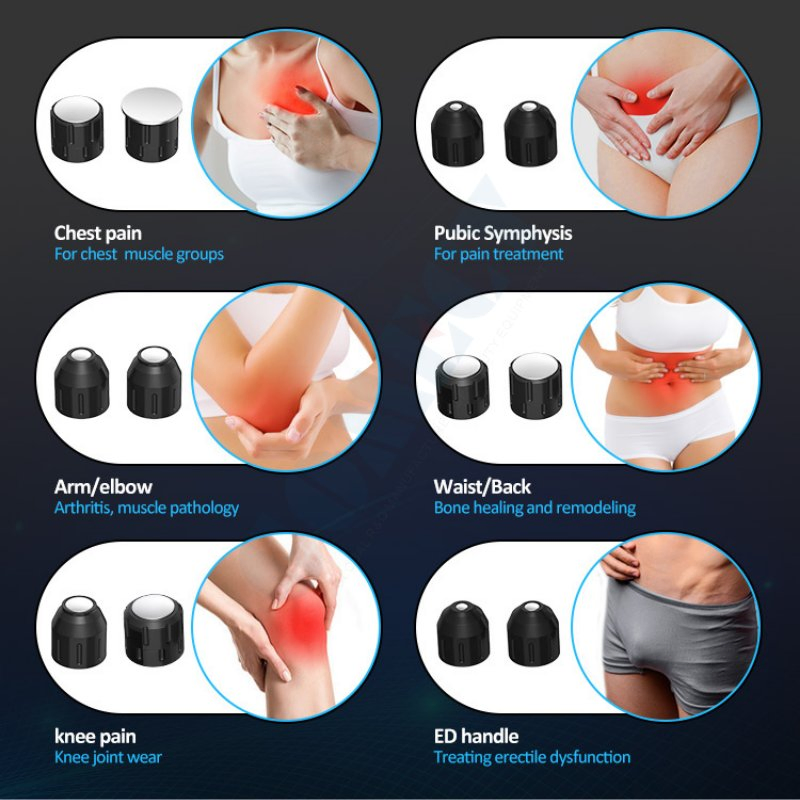
Applicator Types & Handpiece
Equipped with multiple heads to meet different treatment depths:
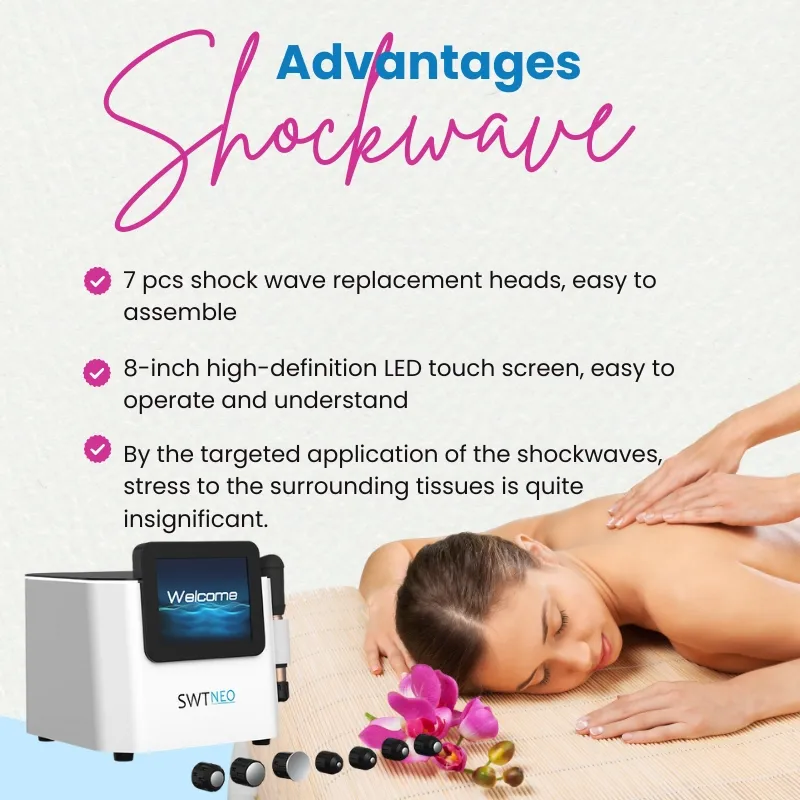
Flat Applicators (6mm - 20mm): For superficial muscle and direct surface impact.
Radial Applicators (25mm - 30mm): For medium-depth energy diffusion and wider coverage.
Focused Applicator (40mm): Deep tissue self-focusing for targeted areas.
Operation Protocols
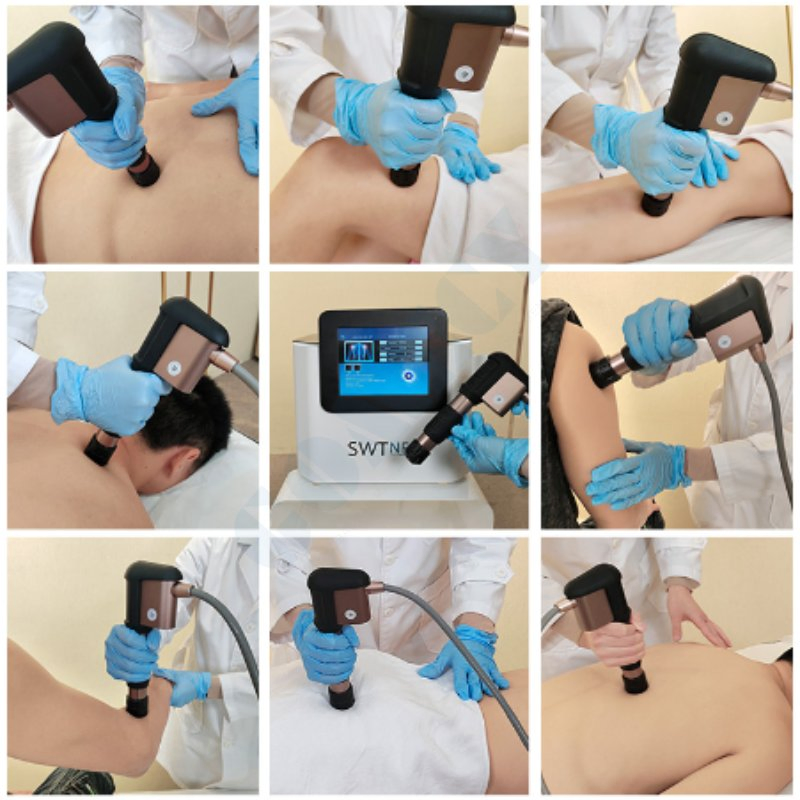
Techniques: Longitudinal striking along fibers, oblique application at 45-degree, parallel back-and-forth movement, and circular movement to reduce discomfort.
Men's Health Protocol: 300 pulses per area, 1500 pulses total per session. Recommended twice per week for 3 weeks.
Product Parameters
Parameter
Specification
Power
200W
Frequency
1Hz - 21Hz
Energy Range
0.5 Bar - 8 Bar
Total Shot Capacity
2,000,000 shots
Display
8-inch Touch Screen
Power Supply
AC 110V / 220V, 50Hz-60Hz
Packing Size
58cm × 46cm × 38cm
Safety & Contraindications
Shockwave therapy should not be applied to the eye region, heart, spinal cord, or major organs. It is restricted for patients with heart disease, severe hypertension, pacemakers, active bleeding, or pregnancy. Avoid areas with metal implants or acute inflammation.
Frequently Asked Questions
Q1: Is pneumatic shockwave therapy painful?Most patients experience a "tapping" sensation. While some discomfort may occur over bony areas, the intensity is adjustable based on your tolerance.
Q2: How many treatment sessions are typically needed?Depending on the condition, 3 to 5 sessions are usually recommended, spaced about a week apart, to achieve optimal results.
Q3: What is the difference between pneumatic and electric shockwaves?Pneumatic systems use compressed air to generate radial waves which are better for large tissue areas and superficial treatment compared to focused electrical waves.
Q4: Are there any side effects after the treatment?Temporary redness, slight swelling, or minor aching may occur in the treated area, but these typically resolve within 24-48 hours.
Q5: Can I return to sports immediately after a session?It is recommended to rest the treated area for 48 hours and avoid high-intensity activities to allow the tissue regeneration process to begin.
Q6: How long does a single treatment session take?A standard session takes approximately 15 to 20 minutes, depending on the number of pulses and the size of the treatment area.