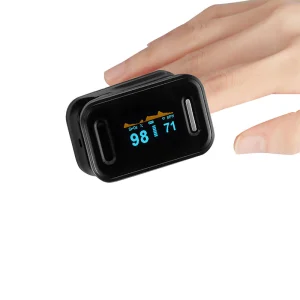
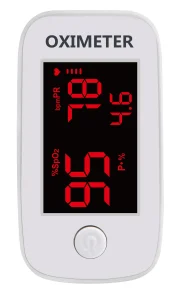
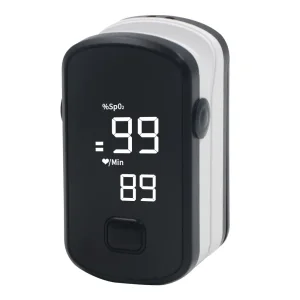
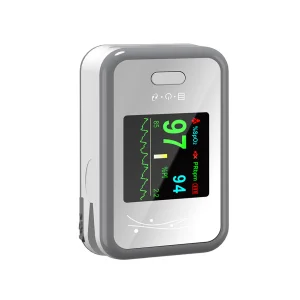
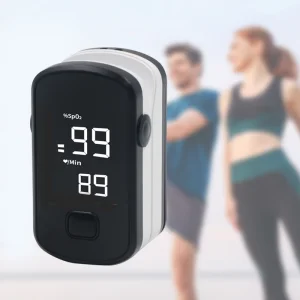
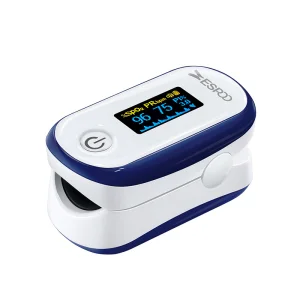
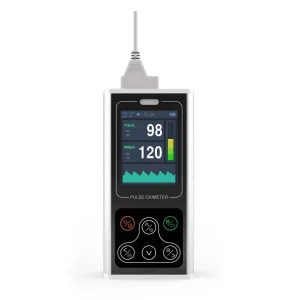
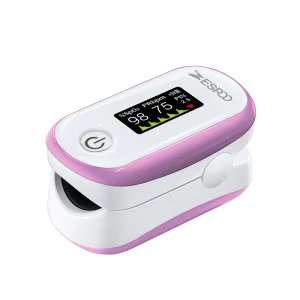
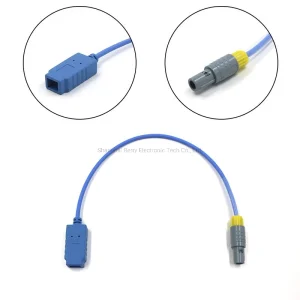
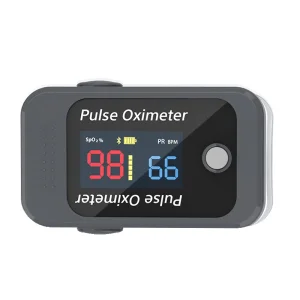
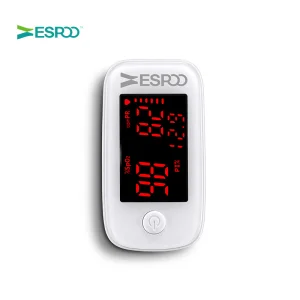
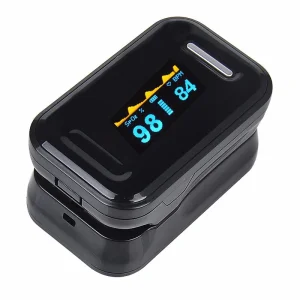
High-precision OEM continuous and spot-check pulse oximetry hardware engineered for clinical reliability, multi-skin tone accuracy, and robust connectivity.
A strategic framework for deploying remote patient monitoring (RPM) technologies within the Kie-Ntem Province, cross-border health corridors, and rural-to-urban clinical networks.
Ebebiyin, serving as the commercial epicenter of Equatorial Guinea’s Kie-Ntem Province and situated at the vital tri-border intersection with Cameroon and Gabon, occupies a crucial role in regional healthcare logistics. The city’s medical infrastructure—anchored by the Hospital Provincial de Ebebiyin alongside peripheral community health outposts (puestos de salud)—faces unique operational demands. Managing both resident populations and transient cross-border medical cases requires a resilient, decentralized remote patient monitoring (RPM) ecosystem.
By integrating medical-grade remote pulse oximetry monitoring systems into local telemetry workflows, municipal and private healthcare providers in Ebebiyin can effectively bridge the distance gap between remote villages and centralized clinical intensive care units (ICUs). Continuous oxygen saturation ($\text{SpO}_2$) and pulse rate telemetry allow early detection of acute respiratory failure, post-infectious pulmonary distress, chronic obstructive pulmonary disease (COPD) exacerbations, and pediatric respiratory syncytial virus (RSV) complications before they escalate into fatal events.
Deploying medical electronics in Ebebiyin requires hardware specifically engineered to endure humid tropical climates (relative humidity routinely exceeding 85%), elevated ambient temperatures, and intermittent grid power availability. Remote pulse oximeters deployed in Kie-Ntem must incorporate high-capacity lithium-polymer energy storage, low-power microcontrollers, solar-charging compatibility, and robust ingress protection (minimum IP22 to IP44 dust/water resistance).
Furthermore, wireless pulse oximetry modules must accommodate hybrid telecommunication profiles. In regions surrounding Ebebiyin where 4G LTE coverage transitions into sub-optimal 2G/3G cellular coverage or localized LPWAN (Low Power Wide Area Networks), our medical sensors utilize lightweight telemetry protocols (such as MQTT-SN over cellular gateways or Bluetooth 5.3 Low Energy to mobile relays) to ensure unbroken patient data transmission to central telemetry dashboards.
Overcoming optical attenuation, motion artifacts, and high-melanin skin variations through multi-wavelength spectrophotometry and dynamic signal filtering.
Our pulse oximetry hardware utilizes dual-wavelength optical photoplethysmography (PPG) using Red ($660\,\text{nm}$) and Near-Infrared ($905\,\text{nm}$ or $940\,\text{nm}$) narrow-spectrum light-emitting diodes (LEDs). By measuring the ratio of absorbance between oxygenated hemoglobin ($\text{HbO}_2$) and deoxygenated hemoglobin ($\text{Hb}$), the sensor calculates the arterial blood oxygen saturation percentage ($\text{SpO}_2$) strictly adhering to the Beer-Lambert law of optical absorption.
Epidermal melanin absorbs light heavily in the visible spectrum, which can introduce systematic bias in standard PPG optical sensors among dark-skinned populations (Fitzpatrick Types V and VI). Our export sensors for Ebebiyin incorporate adaptive LED drive currents and automated gain control (AGC) transimpedance amplifiers that dynamically adjust photodiode gain levels, maintaining high signal-to-noise ratios (SNR) and sub-1.5% clinical deviation across all skin phototypes.
Patient motion, shivering, or ambulatory transport within rural health vectors can create massive optical interference. Our integrated digital signal processor (DSP) runs real-time adaptive noise cancellation (Kalman filtering and discrete Fourier transform analysis) paired with embedded 6-axis accelerometer inputs, eliminating motion-induced false alarms and ensuring stable clinical monitoring during patient transfer.
In cases of peripheral vasoconstriction, shock, or severe hypothermia—frequently encountered in emergency transport between Ebebiyin and regional referral hospitals—pulsatile blood flow to the extremities drops drastically. Our proprietary perfusion index (PI) amplification algorithms can extract valid $\text{SpO}_2$ readings even when arterial pulsation accounts for as little as $0.05\%$ of total optical absorption, providing clinicians with uninterrupted diagnostic visibility.
Selecting the optimal remote pulse oximetry topology based on operational facility scale, network bandwidth, and clinical urgency.
| Deployment Environment | Primary Clinical Focus | Recommended Hardware Spec | Data Telemetry Architecture | Power & Reliability Backup |
|---|---|---|---|---|
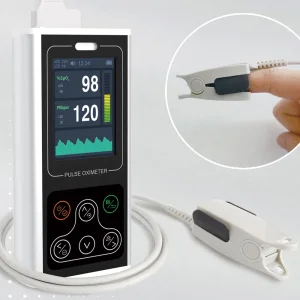
| District Hospital ICUs (Ebebiyin) | Continuous bedside hypoxemia tracking & intensive care telemetry | Multi-parameter Handheld / Wrist Continuous Oximeter with TFT display | Dual-band Wi-Fi (2.4/5GHz) + RJ45 LAN to Hospital Information System (HIS) | AC mains + Internal Lithium battery backup (12+ hours continuous) |
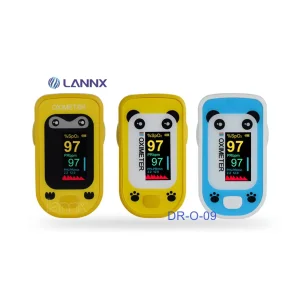
| Peripheral Health Posts (Puestos de Salud) | Maternal-child health screening, malaria anemia evaluation, spot-checks | Ruggedized LED Fingertip Pulse Oximeter with high contrast display | Manual Bluetooth 5.3 upload via Android/iOS community health app | Rechargeable USB-C / AAA Lithium cell dual supply (1000+ spot checks) |
| Cross-Border Emergency Transport | Real-time vital tracking during patient transit along transit corridors | Wearable Ring / Wrist Pulse Oximeter with real-time audio/visual alarms | Direct Cellular IoT (NB-IoT/GPRS) auto-syncing to cloud telemetry dashboard | Integrated solar power pack support + ruggedized silicone housing |
| Home Telehealth & Chronic Care | Long-term COPD management, elderly post-discharge respiratory surveillance | Bluetooth Low Energy (BLE) Automatic Sync Fingertip Oximeter | Automated relay to home gateway / mobile app with cloud clinician portal | Ultra-low power standby (up to 6 months standby battery life) |
Global pioneer in remote patient monitoring systems, medical IoT telemetry integration, and high-precision diagnostic hardware.
Shenzhen Ocent Monitor Co., Ltd. is a technology-driven manufacturer specializing in remote patient monitoring systems, telehealth monitoring solutions, and digital healthcare technologies. Established in 2016, the company is headquartered in Shenzhen, China, one of the world's leading innovation and electronics manufacturing hubs.
With a modern production facility covering more than 8,000 square meters and a workforce of over 180 employees, Ocent Monitor focuses on the design, development, and manufacturing of intelligent healthcare monitoring solutions for hospitals, clinics, long-term care facilities, and home healthcare providers worldwide.
The company's product portfolio includes remote patient monitoring systems, wireless vital sign monitoring devices, telehealth platforms, chronic disease management solutions, wearable health monitoring technologies, and healthcare IoT integration systems. By combining advanced sensor technology, cloud connectivity, and data management capabilities, Ocent Monitor helps healthcare organizations improve patient engagement, enhance care efficiency, and support continuous health monitoring beyond traditional clinical settings.
Supported by an experienced engineering team and rigorous quality management processes, the company maintains strict production standards throughout product development and manufacturing. Ocent Monitor is committed to continuous innovation in connected healthcare technologies, enabling healthcare professionals to access real-time patient information and make informed clinical decisions.
Serving customers across North America, Europe, Asia, the Middle East, and international health tenders in Central Africa, Shenzhen Ocent Monitor Co., Ltd. provides comprehensive OEM and ODM services tailored to diverse healthcare applications and market requirements. Through ongoing investment in research and development, the company strives to deliver reliable, scalable, and future-oriented remote healthcare solutions that support the evolving needs of modern healthcare systems worldwide.








Pioneering next-generation biometric telemetry, predictive edge AI desaturation alerts, and multi-sensor integration for emergent markets.
Moving beyond static threshold alarms, upcoming Ocent firmware embeds light-weight micro-neural networks directly into local pulse oximeters. By evaluating continuous desaturation slopes, pulse rate variability (PRV), and respiration rates, the system predicts impending hypoxemic crisis up to 45 minutes prior to clinical onset.
Future deployments for rural provinces like Kie-Ntem focus on single-wearable form factors combining continuous SpO2, single-lead ECG wave analysis, cuffless continuous blood pressure estimation via pulse transit time (PTT), and skin temperature sensors into a single bio-patch.
To conquer absolute zero-connectivity zones across rural Central Africa, Ocent is engineering solar micro-gateways with direct-to-satellite messaging capability (Direct-to-Cell / LPWAN-Sat), guaranteeing that patient vitals from the furthest villages reach regional specialists in Ebebiyin.
Clear, authoritative guidance regarding procurement, shipping, environmental customization, and compliance for Equatorial Guinea and regional markets.
Explore our full range of certified oximeters, diagnostic analyzers, and continuous monitoring modules tailored for Ebebiyin healthcare exporters and distributors.
Connect directly with Shenzhen Ocent Monitor’s senior medical engineering team. We provide bulk pricing, technical white paper specifications, custom SDK documentation, and turnkey international export assistance.
 Ocent Monitor