Remote patient monitoring has become a practical part of modern healthcare, especially for people managing chronic conditions at home. In 2026, leading solutions combine connected blood pressure cuffs, pulse oximeters, weight scales, glucose meters, and clinician dashboards. These tools can send readings before a patient notices worsening symptoms. A small change may matter.
So, why is remote patient monitoring important? It helps care teams observe health trends between appointments, when traditional visits provide only a brief snapshot. A nurse may notice rising morning blood pressure, repeated low oxygen readings, or sudden weight gain linked to fluid retention. Earlier review can support faster clinical decisions and more personalized follow-up.
However, technology alone does not improve care. Reliable programs need validated devices, clear escalation protocols, trained professionals, and patient-friendly instructions. They also require careful attention to privacy, accessibility, data accuracy, and secure communication. Evidence supports remote monitoring in several clinical settings, but results depend on program design and patient engagement. Not every alert signals an emergency. Some create unnecessary anxiety or increase staff workload.
That limitation deserves attention. A monitoring platform cannot replace physical examination, clinical judgment, or meaningful conversations. The best solutions support—not compete with—professional care. This guide examines the strongest remote patient monitoring options for 2026, comparing usability, integration, security, clinical value, and real-world reliability. The goal is practical guidance for healthcare organizations, clinicians, and patients choosing technology that works beyond the product demonstration.
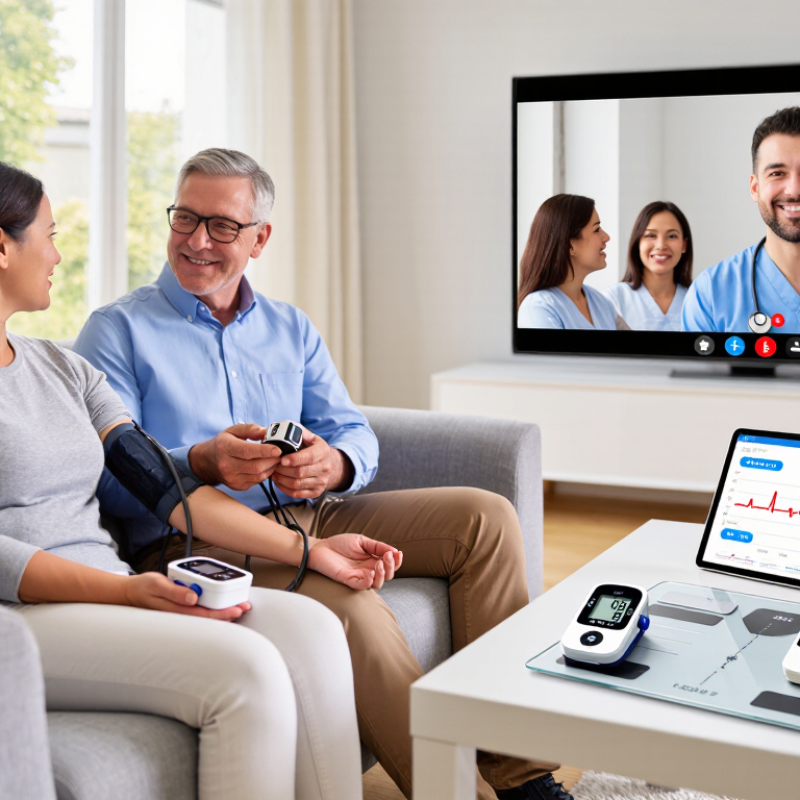
Remote patient monitoring (RPM) means collecting patient health data outside traditional clinical settings. Connected devices transmit readings to qualified care teams for review and action.
Core modalities include blood pressure, blood glucose, oxygen saturation, weight, temperature, heart rhythm, and spirometry.
Some programs also monitor symptoms, medication use, sleep, and mobility.
The scope is expanding.
RPM supports chronic disease management, post-discharge follow-up, pregnancy care, and hospital-at-home pathways. The CDC reports that six in ten American adults live with at least one chronic disease, while four in ten have two or more. This burden makes earlier detection valuable.
A rising weight reading may signal fluid retention before visible swelling appears.
A falling oxygen reading may require prompt clinical assessment.
Yet RPM is not magic. Poor connectivity, confusing instructions, and delayed review can weaken otherwise useful programs.
Tips: Choose clinically validated devices, define escalation thresholds, and assign a named reviewer.
The World Health Organization’s Global Strategy on Digital Health stresses evidence, safety, equity, and human oversight. A 2024 AHRQ evidence review also indicates that RPM benefits vary by condition, workflow, and patient engagement.
That matters.
More data does not always mean better care. Providers should explain who sees each reading, how quickly alerts are handled, and what patients should do when technology fails.
Real-world implementation remains uneven, and that imperfection deserves honest measurement.
2026 Best Remote Patient Monitoring Solutions: Why Important?
Six in ten. The CDC reports that six in ten U.S. adults live with at least one chronic disease. Nearly four in ten manage two or more, according to the National Center for Chronic Disease Prevention and Health Promotion. These conditions often require daily attention, not occasional clinic visits. A patient checking blood pressure at home can reveal a worrying pattern before the next appointment. A connected scale may show fluid changes in heart failure care. Small signals can matter.
Remote patient monitoring supports this daily view. Devices collect measurements and send them to qualified clinical teams for review. Medicare’s 2025 Physician Fee Schedule continues to recognize RPM services under specific billing and documentation requirements. That policy reflects growing clinical use, but payment does not guarantee better care. Staff still need clear escalation rules, reliable devices, and time to contact patients.
The model is not perfect. A missed reading may reflect poor connectivity, fatigue, or confusion. It may not indicate clinical stability. Older adults and patients with limited digital access can face extra barriers. The 2023 National Healthcare Quality and Disparities Report from AHRQ continues to show uneven access to care across U.S. populations. Strong RPM programs therefore include simple instructions, language support, and human follow-up. Technology should notice the change. Clinicians must understand it.
Chronic diseases affect 6 in 10 U.S. adults, and 4 in 10 adults have two or more chronic conditions. This ongoing health burden highlights the need for continuous monitoring, early detection of changes, and timely clinical intervention.
Source: U.S. Centers for Disease Control and Prevention (CDC). The “two or more chronic conditions” group is included within the “at least one chronic condition” group.
Remote patient monitoring (RPM) brings clinical observation beyond the clinic, but its value depends on disciplined workflow. A blood pressure cuff, pulse oximeter, weight scale, or glucose meter captures readings at home. Some devices connect through Bluetooth to a secure mobile application. Others use cellular transmission, helping patients with limited internet access.
Data should move into a protected clinical dashboard with timestamps, patient identity checks, and device status. Clear instructions matter. A patient may measure blood pressure after climbing stairs, producing a misleading result. In practice, nurses often review trends rather than one unusual number. They check symptoms, missing readings, and sudden changes. Human review remains essential.
Escalation needs written thresholds and clinical judgment. A repeated low oxygen reading may trigger a call, symptom questions, or urgent evaluation. An isolated high value might require a careful repeat measurement first. The care team should document actions, timing, and patient responses. I have found that simple prompts improve adherence, though not perfectly. Devices fail. Patients forget. Algorithms can over-alert. Regular calibration, staff training, privacy safeguards, and patient education make RPM more reliable. Still, every program should examine false alarms and missed signals. That uncomfortable review is where safer care develops.
Selecting a remote patient monitoring solution requires more than counting connected devices. Accuracy comes first. Blood pressure cuffs, scales, and pulse oximeters should show validation evidence, calibration practices, and clear error ranges. A missed reading can matter more than a slightly delayed alert. Real clinical experience also shows that patient technique affects results. Simple instructions and repeat checks reduce misleading data.
Integration shapes daily workflow. A strong solution should exchange structured data with the electronic health record, support common interoperability standards, and route urgent alerts to the right care team. Usability matters just as much. Patients may use devices in dim rooms, with weak internet, or limited technical confidence. Large buttons help. So does offline data storage. Clinicians need concise dashboards, trend views, and configurable notifications, not another crowded inbox.
CMS reimbursement codes require careful review in 2026. Common RPM services may include 99453 for setup and education, 99454 for device supply and data transmission, 99457 for treatment management, and 99458 for additional management time. Requirements can involve medical necessity, connected-device data, documented time, and qualified clinical staff. Rules and payer interpretations may change, so current CMS guidance should be checked before billing. That detail is easy to overlook. A technically impressive platform may still fail operationally if documentation is incomplete. Comparing accuracy, integration, usability, and coding readiness together produces a more realistic purchasing decision.
2026 Best Remote Patient Monitoring Solutions: Why They Matter
Noncommunicable diseases cause about 74% of deaths worldwide, according to the World Health Organization. Heart disease, cancer, diabetes, and chronic lung disease often develop quietly. A blood pressure reading may look ordinary today, then change sharply after several stressful days. Remote patient monitoring can capture these patterns between clinic visits. It connects home measurements with professional review, helping care teams respond earlier. Still, monitoring is not a cure. It works best with clear clinical protocols, trained staff, and reliable devices.
Good solutions should support accurate blood pressure, glucose, oxygen, or weight readings. They should also protect patient data and explain results in simple language. Evidence matters more than attractive dashboards. Healthcare organizations should check validation studies, accessibility, response times, and integration with clinical workflows. A patient who lacks internet access may need another option. That gap is easy to overlook. Technology can widen inequality if planning stops at software.
Tips: Choose devices validated for intended use. Set clear thresholds for urgent alerts. Teach patients how to measure correctly, including posture and timing. Review false alarms regularly, because too many alerts can exhaust staff. Ask patients whether the process fits daily life. Perfect data is unlikely. Honest feedback improves the system.
Global impact of noncommunicable diseases and the clinical role of remote patient monitoring
| Data Dimension | Verified Global Data | Clinical Meaning | How Remote Patient Monitoring Helps | Primary Source |
|---|---|---|---|---|
| Share of global deaths caused by NCDs | 74% | Noncommunicable diseases are responsible for approximately three-quarters of deaths worldwide. | Supports continuous follow-up for patients with long-term conditions instead of relying only on periodic clinic visits. | World Health Organization (WHO), Noncommunicable Diseases Fact Sheet |
| Annual NCD deaths | 41 million deaths per year | NCDs create a sustained global burden requiring long-term prevention, diagnosis, treatment and monitoring. | Enables care teams to review patient-generated data between appointments and identify changes that may require clinical attention. | WHO, Noncommunicable Diseases Fact Sheet |
| Deaths from the four major NCD groups | More than 80% of all NCD deaths | Cardiovascular diseases, cancers, chronic respiratory diseases and diabetes account for the great majority of NCD mortality. | RPM programs can be organized around condition-specific measurements such as blood pressure, weight, blood glucose, oxygen saturation and symptom status. | WHO, Noncommunicable Diseases Fact Sheet |
| Cardiovascular disease burden | At least 19 million deaths in 2021 | Cardiovascular diseases remain the leading NCD group globally, including heart disease and stroke. | Home blood-pressure monitoring, weight tracking and symptom questionnaires can support earlier review of deterioration and treatment response. | WHO, World Health Statistics 2023 |
| Cancer burden | Nearly 10 million deaths in 2020 | Cancer is a major cause of premature mortality and often requires complex, longitudinal care. | Remote symptom checks, medication support, functional-status reporting and selected vital-sign monitoring can complement oncology follow-up. | WHO, Cancer Fact Sheet |
| Diabetes prevalence | 830 million people living with diabetes in 2022 | Diabetes requires ongoing monitoring and is associated with cardiovascular, kidney, eye and nerve complications. | Connected glucose measurements, medication adherence questions, weight tracking and clinician review can support individualized management. | WHO, Diabetes Fact Sheet |
| Chronic respiratory disease | More than 3.5 million deaths from COPD in 2021 | Chronic obstructive pulmonary disease is a major cause of long-term disability and mortality. | Pulse oximetry, respiratory symptom surveys, activity data and escalation protocols may help support structured follow-up. | WHO, Chronic Obstructive Pulmonary Disease Fact Sheet |
| Premature NCD mortality | 18 million deaths before age 70 in 2019 | Premature deaths from NCDs are an important global public-health challenge, particularly where access to continuous care is limited. | Remote monitoring can extend contact with healthcare teams, but it should complement—not replace—diagnosis, prevention and in-person care when needed. | WHO, Noncommunicable Diseases Fact Sheet |
| Core RPM data types | Blood pressure, blood glucose, body weight, oxygen saturation, heart rate and symptoms | These measurements correspond to common clinical monitoring needs across cardiovascular, metabolic and respiratory conditions. | The most appropriate solution depends on the patient’s condition, measurement accuracy, data security, accessibility and clinical escalation workflow. | WHO condition-specific guidance and standard clinical monitoring practice |
| Best-practice implementation principle | Measurement alone is not sufficient | Patient data becomes clinically useful when it is connected to validated devices, trained staff, defined thresholds and timely follow-up. | A strong RPM solution should include consent, privacy protection, device support, data review responsibilities and clear emergency instructions. | WHO digital-health and patient-safety principles |
Sources: WHO Noncommunicable Diseases Fact Sheet; WHO Cardiovascular Diseases Fact Sheet; WHO Cancer Fact Sheet; WHO Diabetes Fact Sheet; WHO COPD Fact Sheet. Data years are shown where applicable; RPM should be implemented under appropriate clinical governance.
It collects health readings at home and sends them to a clinical team. Common measurements include blood pressure, oxygen, weight, and glucose. It extends observation between clinic visits. It is not a cure.
Common devices include blood pressure cuffs, pulse oximeters, scales, and glucose meters. Some use Bluetooth and mobile applications. Others use cellular transmission. Device quality matters.
Patients should follow clear instructions about posture, timing, and device placement. Measuring after climbing stairs may produce a misleading result. Repeat unusual readings when appropriate. Small details matter.
Clinicians review trends, symptoms, missing readings, and sudden changes. They should not rely on one unusual number alone. Human review remains essential. Algorithms can over-alert.
Written thresholds should guide escalation. A repeated low oxygen reading may prompt a call or urgent evaluation. An isolated high value may require careful repetition first. Symptoms still matter.
Teams should record actions, timing, readings, and patient responses. They should document missing data and follow-up attempts. Incomplete notes can weaken care and reimbursement decisions. That risk is easy to miss.
Compare accuracy, validation evidence, integration, usability, privacy, and alert routing. Clinicians need clear trends, not another crowded inbox. Patients may need large buttons and offline storage. Perfect usability is unlikely.
Programs should support patients with weak internet access or limited technical confidence. Cellular connections may help some households. Simple education also matters. Technology alone cannot solve access gaps.
Organizations should confirm medical necessity, connected-device data, documented time, and staff qualifications. Current payer guidance should be checked before billing. Rules may change. Do not assume.
Teams should review false alarms, missed signals, device failures, and patient feedback. Staff training and regular calibration improve reliability. Some problems will remain. Honest review makes care safer.
Remote patient monitoring (RPM) in 2026 is an important part of modern healthcare, allowing clinicians to track patients’ health outside traditional clinical settings. Using connected devices such as blood pressure monitors, glucose meters, pulse oximeters, and weight scales, RPM collects health data and securely transmits it for professional review. Care teams can identify concerning changes, contact patients, adjust care plans, and escalate urgent cases when necessary. This approach supports earlier intervention, stronger continuity of care, and greater convenience for people managing long-term conditions.
Why is remote patient monitoring important? Approximately six in ten U.S. adults live with at least one chronic disease, while noncommunicable diseases account for about 74% of deaths worldwide. Effective RPM solutions can help address this growing burden by improving access, encouraging patient engagement, and supporting regular monitoring. When comparing solutions in 2026, healthcare organizations should consider measurement accuracy, system integration, ease of use, data security, clinical workflows, and applicable CMS reimbursement codes. The best solution is one that connects reliable technology with responsive, patient-centered care.

Ocent Monitor