Remote patient monitoring (RPM) uses connected devices to collect health data outside traditional clinical settings. Blood pressure cuffs, glucose meters, pulse oximeters, and smart scales can send readings to care teams. The data may reveal deterioration before symptoms become severe. A single high reading is not a diagnosis. Context still matters.
The need is substantial. The CDC reports that six in ten U.S. adults live with at least one chronic disease. Nearly four in ten have two or more. The World Health Organization estimates that noncommunicable diseases cause 74% of deaths worldwide. These figures explain why continuous observation can support more responsive care. The American Medical Association’s 2022 digital health survey found that 93% of physicians viewed digital health tools as advantageous. Yet enthusiasm does not guarantee good implementation.
So, who can benefit from remote patient monitoring? People with heart failure, diabetes, hypertension, chronic respiratory disease, or recovery needs may benefit most. Older adults can avoid some unnecessary clinic trips. Clinicians can review trends from a patient’s kitchen table, not only isolated office readings. Caregivers may also notice missed measurements or sudden changes.
RPM is not a universal solution. Poor internet access, confusing instructions, device errors, and alert fatigue can weaken results. Some patients may feel watched rather than supported. The evidence is promising, but not perfectly tidy. Effective programs require validated devices, trained professionals, privacy protections, timely clinical responses, and patient consent. A device is not care by itself. Clear communication makes the difference.
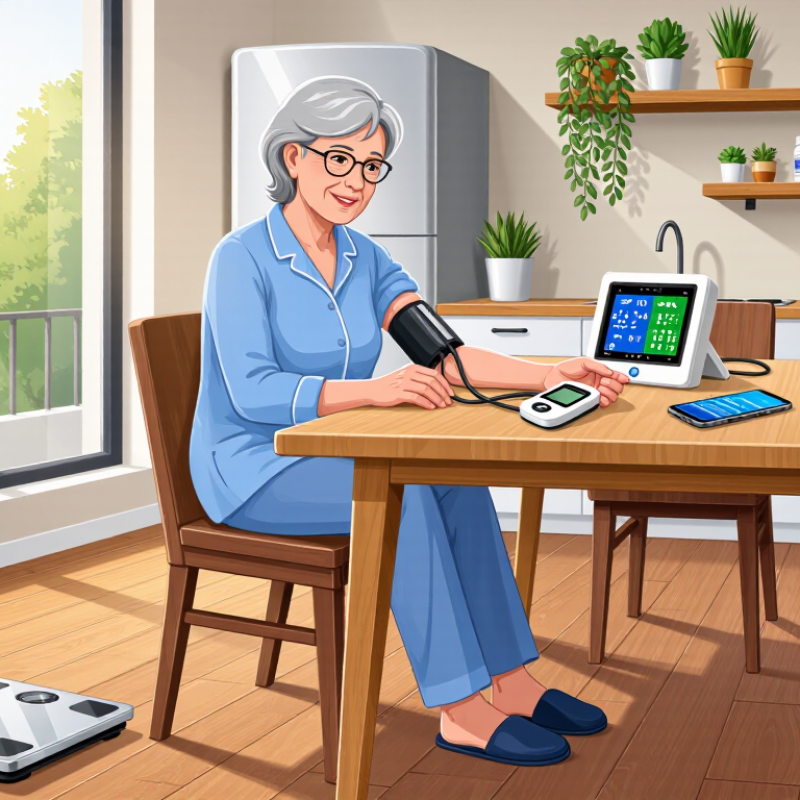
Remote patient monitoring means collecting health data outside a clinic and sharing it with a care team. A patient may use a blood pressure cuff, glucose meter, pulse oximeter, or weight scale at home. The device records a reading, while a secure system sends it for clinical review. This differs from a video appointment. RPM can reveal gradual changes before symptoms become serious. For example, rising morning weights may suggest fluid retention in someone with heart failure. Clinicians can then assess the pattern and decide whether advice or an appointment is appropriate.
Tips: Use devices correctly. Sit quietly before checking blood pressure. Record unusual symptoms beside each reading. Ask whether your equipment is clinically validated. Never change prescribed treatment because of one result.
People with diabetes, hypertension, heart disease, breathing disorders, or recovery needs may benefit. Older adults can also gain support without frequent travel. However, access to internet service, digital skills, and reliable equipment affects results. That limitation is easy to overlook. Some patients may feel watched rather than supported, especially when alerts arrive without clear explanations. A monitoring program should include consent, privacy safeguards, and a defined response plan. It should also explain who reviews the data and how quickly they respond. Remote monitoring is useful, but it cannot replace physical examination, emergency care, or thoughtful clinical judgment. A normal number can still hide a problem.
Remote patient monitoring (RPM) uses connected devices to collect health data outside a clinic, such as blood pressure, blood glucose, body weight, and oxygen saturation. It can be especially useful for people managing chronic conditions that require regular measurements and follow-up.
Percentage of U.S. adults affected by selected conditions commonly supported by RPM. Hypertension: CDC/NCHS, 2017–2020; obesity: CDC/NCHS, 2017–2020; diabetes: CDC National Diabetes Statistics Report, 2023; coronary heart disease: CDC/NCHS, 2021.
Remote patient monitoring (RPM) connects a patient’s home with a clinical care team. A blood-pressure cuff, glucose meter, pulse oximeter, or wearable records health data. The device sends readings through a secure application or cellular connection. Software then organizes the information for review.
Clinicians set patient-specific thresholds. A rising blood-pressure pattern may trigger a message, medication review, or earlier appointment.
RPM does not replace emergency care. It supports decisions between visits. This matters because the CDC reports that six in ten U.S. adults live with at least one chronic disease. Nearly four in ten have two or more.
Older adults, patients recovering after discharge, and people managing diabetes may benefit most.
Yet technology alone cannot improve care. Poor connectivity, confusing instructions, and missed readings remain practical problems.
Tips:
Place devices where they are easy to use. Record readings at consistent times. Ask whether a human reviews alerts. Confirm what happens after an abnormal result.
A 2023 Rock Health consumer report found that 76% of U.S. adults had used telehealth. That figure suggests digital care is familiar, but not universally comfortable.
The weak point is interpretation. One unusual reading can reflect stress, movement, or an incorrect cuff position.
Clear protocols and patient feedback are essential. Data should guide care, not create another daily burden.
Remote patient monitoring can support people whose health changes need regular observation outside a clinic. It is especially useful for hypertension, diabetes, heart failure, chronic obstructive pulmonary disease, and recovery after surgery. A patient may record blood pressure each morning, check blood glucose before meals, or measure oxygen levels after walking across a room. These details give clinicians a clearer view of daily health patterns.
For heart failure, weight changes may signal fluid buildup before severe symptoms appear. People with COPD can track oxygen levels, breathing difficulty, and rescue medication use. Patients managing diabetes can share glucose readings alongside meal notes and activity levels. Pregnancy-related hypertension may also require frequent blood pressure checks, under direct clinical guidance. Monitoring can support older adults, people with limited mobility, and patients living far from medical services.
It is not effortless. A missed reading may reflect fatigue, poor internet service, or confusion rather than worsening illness. Devices can also produce inaccurate results when used incorrectly. Clinicians should explain proper technique, review unusual readings, and adjust care based on the patient’s full situation. Remote monitoring does not replace urgent medical attention for chest pain, severe breathing trouble, fainting, or other emergency symptoms. Its value depends on reliable equipment, understandable instructions, and timely human follow-up.
Remote patient monitoring may benefit people whose health changes between clinic visits. This includes adults with diabetes, hypertension, heart failure, COPD, or kidney disease. The Centers for Disease Control and Prevention reports that six in ten U.S. adults have at least one chronic condition. Four in ten have two or more. For them, regular readings can reveal rising blood pressure or weight before symptoms become severe. A patient weighing at home may notice a two-day increase. That small clue can prompt timely clinical review.
Older adults, people recovering after hospital discharge, and those living far from clinics may also benefit. Remote monitoring can reduce travel, support caregivers, and create a clearer daily record.
However, access is uneven. A 2024 national health survey found that internet access, digital confidence, and device availability still vary by age and income. Monitoring is not automatically safer. Poorly placed sensors, missing readings, or unclear escalation plans can create false reassurance. Clinical judgment remains essential.
Tips: Choose measurements linked to the patient’s condition. Use simple devices and plain instructions. Confirm who reviews alerts and how quickly. Ask whether the patient can charge, connect, and use the equipment. Recheck the plan after two weeks. The Journal of Medical Internet Research has reported improved outcomes in several remote-monitoring studies, but results differ by program design and patient engagement. That uncertainty matters. A thoughtful pilot may be more reliable than enrolling everyone at once.
Remote patient monitoring (RPM) collects health data outside a clinic. It may use a blood pressure cuff, scale, glucose meter, or pulse sensor. Clinicians can review trends instead of relying on one hurried appointment reading. For people with hypertension, diabetes, heart failure, or mobility barriers, that continuity may reveal deterioration earlier. Earlier action matters.
Daily measurements can support medication adjustments, reinforce self-management, and reduce unnecessary travel. Care teams may notice rising weight, worsening oxygen levels, or repeated high readings. Still, RPM is not a constant watch. A device may be poorly placed, uncharged, damaged, or unsuitable for a patient’s condition. Internet outages and skipped measurements create gaps that software cannot interpret reliably. Numbers also lack context. Pain, stress, recent exercise, and incorrect technique can change a result. Access is uneven, and frequent alerts can overwhelm staff.
Safe programs use clinically appropriate, validated equipment and clear instructions. Patients should learn positioning, timing, cleaning, and when to repeat a reading. Each alert needs trained clinical review, not automatic reassurance or panic. RPM also cannot replace a physical examination when symptoms need direct assessment. Urgent symptoms, such as severe breathlessness, chest pressure, fainting, or confusion, require local emergency help. Privacy deserves equal attention. Data should be transmitted securely, shared only with necessary professionals, and explained in plain language. Even good monitoring needs human judgment. That part is easy to underestimate.
| Dimension | Core Information | Practical and Safety Considerations |
|---|---|---|
| Definition | Remote patient monitoring (RPM) is the collection and transmission of patient health data from outside a traditional clinical setting so that a qualified healthcare professional can review it and use it in care decisions. | RPM is different from a video visit or a general health app. It requires an appropriate clinical purpose, a defined monitoring process, and timely review of relevant readings. |
| Commonly Monitored Data | Typical measurements include blood pressure, blood glucose, body weight, blood oxygen saturation, heart rate, temperature, and selected symptoms or activity information. | The measurement should match the condition being managed. For example, daily weight may help identify fluid changes in some patients with heart failure, while blood glucose monitoring is central to diabetes care. |
| People Who May Benefit | Potentially suitable People with chronic conditions, older adults who need additional follow-up, patients recovering after a procedure, and people who have difficulty attending frequent in-person appointments. |
Suitability depends on clinical need, the patient’s ability to use the equipment, reliable communication, access to technical support, and whether the care team can respond to concerning results. |
| Chronic Disease Management | RPM may support the management of conditions such as hypertension, diabetes, chronic obstructive pulmonary disease, and heart failure by providing more frequent information between visits. | RPM complements, rather than replaces, medication reviews, physical examinations, laboratory testing, and other forms of routine care. It is not appropriate to change treatment solely from an isolated reading without clinical context. |
| Post-Discharge Follow-Up | Monitoring after hospital discharge or a procedure can help the care team identify changes in symptoms or vital signs earlier than a scheduled appointment might. | Patients should receive clear instructions about which symptoms require an urgent call, same-day clinical advice, or emergency services. RPM should not delay emergency evaluation. |
| Potential Benefits | Possible benefits include improved access to care, earlier recognition of concerning trends, better support for self-management, fewer unnecessary visits, and more informed discussions between patients and clinicians. | Benefits vary by condition, program design, patient engagement, and response time. Evidence is stronger for some conditions and use cases than for others; RPM does not guarantee improved outcomes for every patient. |
| Patient Convenience | Measurements can often be taken at home, reducing travel and allowing clinicians to view information between scheduled appointments. | Convenience may be reduced by device setup, charging, internet or mobile connectivity requirements, repeated measurements, and the need to follow a specific measurement technique. |
| Accuracy of Readings | Reliable readings depend on a validated device, correct sizing and placement, proper positioning, calibration where applicable, and adherence to the device instructions. | For blood pressure, patients generally need appropriate cuff size, a seated rest period, back support, feet on the floor, and an arm supported at heart level. An inaccurate technique can produce misleading results. |
| Data Review and Escalation | A safe RPM program defines who reviews the data, how often it is reviewed, which thresholds trigger action, and how the patient is contacted. | Patients must know that data transmission may not be continuously watched. A reading outside the expected range should be interpreted with symptoms, previous readings, medications, and other clinical information. |
| Privacy and Security | Health readings and symptom reports are sensitive personal information and should be handled using appropriate privacy, access-control, authentication, and data-protection practices. | Patients should understand what information is collected, who can access it, how it is transmitted, and how to report a lost device, suspicious message, or unauthorized access. |
| Digital Access and Inclusion | RPM may be delivered through connected medical devices, mobile networks, patient portals, telephone communication, or other approved channels. | Programs should account for language needs, disabilities, health literacy, limited broadband access, affordability, and the availability of caregiver or technical assistance. |
| Important Limitations | RPM may generate incomplete, delayed, or inaccurate data. It cannot replace every physical examination, diagnostic test, or emergency assessment. | Some patients may not be able to use the equipment independently or may experience monitoring fatigue. Programs should periodically reassess whether RPM remains useful and appropriate. |
| Emergency Situations | RPM is not an emergency response system. Severe symptoms require immediate action regardless of whether a device has transmitted a reading. | Chest pain, severe breathing difficulty, signs of stroke, fainting, severe allergic reaction, or other life-threatening symptoms require local emergency services rather than waiting for a clinician to review RPM data. |
| Best-Fit Program Characteristics | A well-designed program uses clinically relevant measurements, simple instructions, dependable equipment, secure data handling, patient education, and documented follow-up procedures. | Before enrollment, discuss the goals of monitoring, expected measurement frequency, contact procedures, equipment responsibilities, privacy practices, and what to do when readings or symptoms change. |
It connects home devices with a clinical care team. Readings travel through a secure application or cellular connection.
Common devices include blood-pressure cuffs, glucose meters, pulse oximeters, scales, and wearable sensors.
It may support hypertension, diabetes, heart failure, COPD, kidney disease, and recovery after surgery.
Repeated readings show patterns between appointments. A two-day weight increase may suggest fluid buildup in some patients.
Older adults, people recovering after discharge, and patients living far from clinics may benefit.
No. Chest pain, fainting, or severe breathing trouble requires urgent medical attention.
Yes. Movement, stress, poor sensor placement, or incorrect technique can distort results.
Ask who reviews alerts, how quickly they respond, and what happens after an abnormal reading.
Keep devices nearby. Measure at consistent times. Check charging, internet access, and instructions.
Missed readings, poor connectivity, and confusing instructions can weaken the system. Technology alone is not enough.
Remote patient monitoring is a healthcare approach that uses connected devices and digital communication to collect health information outside traditional clinical settings. Patients may record measurements such as blood pressure, blood glucose, heart rate, weight, oxygen levels, or symptoms, which can then be reviewed by qualified healthcare professionals. This process supports ongoing observation, timely communication, and more informed adjustments to a care plan without requiring every check-in to happen in person.
People managing long-term conditions, recovering after treatment, or needing closer observation may benefit from this approach. The key question of who can benefit from remote patient monitoring depends on a person’s medical needs, ability to use the required technology, access to reliable communication, and relationship with a care team. Potential benefits include convenience, earlier recognition of concerning changes, better self-management, and fewer unnecessary visits. However, monitoring does not replace urgent medical care or professional judgment. Data may be incomplete or inaccurate, so patients should follow device instructions, protect their privacy, and seek immediate help when serious symptoms occur.

Ocent Monitor