China Top Remote Monitoring What Conditions Can Be Monitored

Time:2026-11-10 Author:Charlotte
0%

Remote monitoring is changing how clinicians follow people between appointments, especially when a condition needs regular measurements rather than occasional snapshots. The key question is practical: what conditions can be monitored remotely, and which readings are useful enough to guide care? In China, connected devices and digital health services increasingly support follow-up at home, but access, device quality, and clinical workflows still vary. The technology is not a substitute for professional assessment.

The range is broad. Validated devices can record blood pressure, blood glucose, heart rate, oxygen saturation, body weight, and temperature. These measurements can help teams track hypertension, diabetes, some heart and lung conditions, and recovery after illness or surgery. The U.S. Centers for Medicare & Medicaid Services describes remote physiologic monitoring around measurements such as blood pressure, weight, and pulse oximetry. This offers a useful reference, though payment rules are not clinical guidance for every country. Small signals matter.

Industry evidence points to growing acceptance of remote care. McKinsey’s 2021 report, “Telehealth: A Quarter-Trillion-Dollar Post-COVID-19 Reality?”, estimated that telehealth use in the United States was 38 times higher than before the pandemic. That figure covers telehealth broadly, not remote monitoring alone, and should not be presented as a China-specific result. The World Health Organization’s Global Strategy on Digital Health 2020–2025 also emphasizes that digital tools should strengthen health systems and remain people-centered. A dashboard can still tell an incomplete story. Readings may be affected by poor device fit, missed measurements, or changing daily routines. Remote monitoring works best when clinicians interpret trends, confirm concerning results, and agree with patients on what to do next.
China Top Remote Monitoring What Conditions Can Be Monitored

Remote Patient Monitoring in China: Scope and Key Technologies

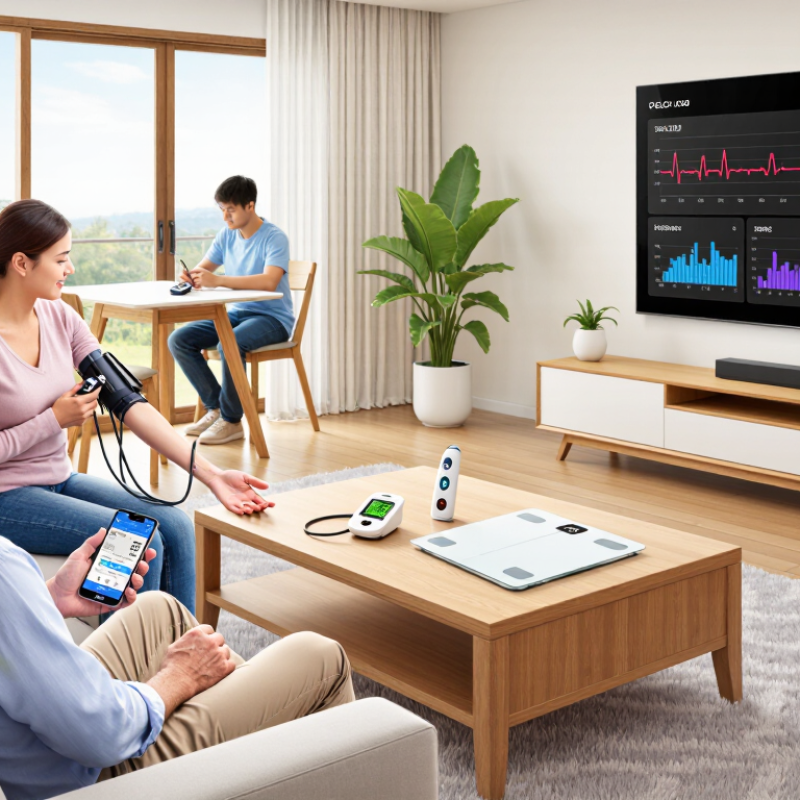
Remote patient monitoring in China can track blood pressure, blood glucose, heart rate, oxygen saturation, body weight, and selected ECG readings. A patient may check blood pressure at home with a connected cuff, while a wearable records pulse and activity. Data move through a phone or home gateway to a clinical platform, where care teams can review trends and flag unusual readings.

The need is substantial: the World Health Organization’s Noncommunicable Diseases Country Profiles (2018) estimated that noncommunicable diseases caused 89% of deaths in China. That figure describes the health burden, not RPM use.

Key technologies include connected medical devices, mobile apps, cloud-based records, and analytics that identify changes over time. CNNIC’s 53rd Statistical Report on China’s Internet Development reported 414 million online medical service users by December 2023, or 38.7% of internet users. This indicates a broad digital-health audience, but it does not measure how many people use remote monitoring.

Important distinction.

In practice, readings can be distorted by a loose cuff, movement, or missed uploads. Automated alerts need clinical review, and a dashboard is not a diagnosis. Access, device accuracy, and follow-up still vary; technology alone does not close those gaps.

Vital Signs and Health Indicators That Can Be Tracked Remotely

Remote monitoring can follow several vital signs and health indicators from home. Common measurements include blood pressure, heart rate, oxygen saturation, and body temperature. A person with a blood pressure cuff might record a morning reading while seated at the kitchen table. Regular measurements can help clinicians notice patterns linked to hypertension or recovery from illness. One unusual number does not tell the whole story.

People managing diabetes may track glucose levels throughout the day. Connected scales can record weight changes, while activity trackers may log steps, sleep duration, and resting pulse. These measures can offer useful clues about fluid retention, fatigue, or changing daily routines. Small changes matter. But a tracker’s estimate of sleep or activity is not a medical diagnosis, and device accuracy can vary.

Some monitoring plans also include symptoms, such as breathlessness, dizziness, or pain, entered in a daily log. Pairing these notes with measurements gives clinicians more context than numbers alone. Context matters. A fever reading may be affected by when it was taken, and a pulse can rise after climbing stairs. Remote readings are helpful, but they should be interpreted alongside a person’s history and professional advice. Missed entries happen, too, so a monitoring plan should fit real life rather than demand perfect records.

Chronic Conditions Commonly Monitored Outside the Hospital

Remote monitoring can help care teams track chronic conditions between clinic visits. People with high blood pressure may send readings from a home cuff, ideally after sitting quietly for several minutes. Diabetes care may include glucose readings, meal notes, and medication timing. These details reveal patterns better than one isolated result. Small changes matter. For heart failure, daily weight and symptom logs can flag fluid shifts. Clinicians may also monitor heart rhythm or oxygen levels when appropriate. A scale beside the bathroom sink can make weighing part of a routine.

People with COPD may record oxygen levels and breathing symptoms. Those with irregular heart rhythms may use prescribed devices to capture episodes at home. These tools support follow-up, but they cannot diagnose every problem or replace an examination. Numbers need context. A cold hand, loose sensor, recent activity, or missed entry can affect a reading. That is easy to overlook. Care teams should explain when to measure, which changes matter, and whom to contact. Patients should continue prescribed treatment unless their care team advises otherwise. Sudden changes or severe breathlessness warrant prompt medical advice.

How Devices and Telehealth Platforms Collect Patient Data

Remote monitoring starts with a device measuring a specific signal at home. A digital cuff records blood pressure, while a fingertip sensor estimates oxygen saturation and pulse. Glucose meters, connected scales, and wearable ECG devices can add readings for diabetes, heart failure, or rhythm concerns. Some systems also log steps, sleep, symptoms, or medication use. Small details matter. A cuff over a sleeve, cold fingers, or a missed measurement can skew the picture.

Data usually travels from a device to a phone or home hub through Bluetooth, then reaches a telehealth platform over Wi-Fi or cellular service. The app may display trends, ask about breathlessness, and record when each measurement was taken. Clinicians can review changes between appointments instead of relying only on memory. Alerts may flag values outside a care plan, but thresholds should be tailored to each patient. They are not diagnoses.

Useful systems make the process clear. Patients need to know when to measure, how to repeat an unusual result, and whom to contact. A dashboard cannot tell whether someone felt dizzy while standing unless that detail is recorded. Connectivity can fail, batteries run low, and too many alerts may be ignored. These gaps deserve attention. Remote data supports clinical judgment; it does not replace an examination or urgent care for severe symptoms.

China Top Remote Monitoring: What Conditions Can Be Monitored — How Devices and Telehealth Platforms Collect Patient Data

Condition or Care Area Commonly Monitored Data Typical Device or Measurement Method How Data Is Collected and Shared Typical Monitoring Pattern Important Considerations
Hypertension Systolic and diastolic blood pressure; pulse rate Automated upper-arm blood pressure monitor Readings may be entered manually or transferred from a connected monitor to a mobile application, then shared with a care team through a secure platform. Often measured at scheduled times, such as morning and evening, according to the care plan. Use a properly sized cuff and follow standardized measurement instructions. A single reading does not establish a diagnosis.
Heart Failure Body weight, blood pressure, pulse rate, symptoms, and sometimes oxygen saturation Digital scale, blood pressure monitor, pulse oximeter, symptom questionnaire Patients submit measurements through an app, portal, or telephone-supported workflow. The platform can organize trends for clinician review. Weight and symptoms may be recorded daily; other measurements follow the clinician's plan. Sudden changes can warrant clinical review, but thresholds and responses should be individualized by the care team.
Diabetes Blood glucose; in some care plans, activity, meals, medication use, or insulin delivery information Blood glucose meter or continuous glucose monitoring sensor Meter results may be entered or synced. Continuous sensors record glucose at intervals and transmit readings to a compatible receiver or application. Frequency depends on the treatment plan; continuous sensors collect repeated readings throughout the day. Sensor readings and finger-stick results may differ. Treatment decisions should follow clinical guidance and device instructions.
Chronic Obstructive Pulmonary Disease (COPD) Oxygen saturation, pulse rate, breathlessness, cough, and symptom changes Pulse oximeter, symptom diary, digital questionnaire Patients record spot measurements and symptoms in a telehealth application or report them during a remote check-in. Scheduled or symptom-triggered checks, based on the clinician's care plan. Oxygen readings can be affected by circulation, movement, nail products, and other factors; symptoms also require clinical context.
Asthma Peak expiratory flow, symptoms, reliever use, and possible triggers Peak flow meter, symptom diary, connected inhaler sensor where available Peak-flow values and symptom reports can be logged in an app or patient portal and reviewed as a time series. May be recorded regularly or during worsening symptoms, as directed by the care plan. Peak-flow zones should be set by a qualified clinician. Remote tracking does not replace an action plan for severe symptoms.
Cardiac Rhythm Follow-up Heart rate and rhythm recordings; symptoms such as palpitations or dizziness Medical-grade wearable monitor, ambulatory ECG monitor, or validated single-lead ECG device Recordings may be stored on the device and transmitted for review, or captured during a patient-initiated measurement. Continuous, scheduled, or symptom-triggered, depending on the monitoring device and clinical question. Consumer readings may be incomplete or contain artifacts. Diagnosis and treatment decisions require qualified clinical interpretation.
Sleep-Related Breathing Disorders Overnight oxygen saturation, pulse, airflow, breathing effort, and sleep-related events, depending on the test Home sleep apnea testing equipment or overnight pulse oximeter Recorded data is uploaded or returned for clinician analysis; some systems provide a patient-facing summary. Usually collected overnight for a prescribed number of nights. Home testing is not appropriate for every patient and may not measure all variables captured in an attended sleep study.
Post-Operative Recovery Pain, temperature, wound observations, mobility, medication use, and selected vital signs Digital questionnaire, thermometer, blood pressure monitor, or pulse oximeter when indicated Patients submit structured check-ins, measurements, or photographs through a secure platform for review by the care team. Daily or at intervals defined by the discharge and follow-up plan. Image quality and self-reported symptoms vary. New or worsening concerns may require direct assessment.
Pregnancy and Postpartum Follow-up Blood pressure, symptoms, weight, and care-plan-specific observations Home blood pressure monitor, digital questionnaire, and scale where appropriate Measurements and symptom responses can be submitted through an app or portal and reviewed by a maternity care team. Frequency is individualized according to pregnancy stage, risk factors, and clinician instructions. Remote monitoring supplements, but does not replace, recommended prenatal and postpartum appointments or urgent evaluation when needed.
General Post-Discharge Monitoring Temperature, blood pressure, pulse, oxygen saturation, symptoms, and medication adherence Home measurement devices plus patient-reported questionnaires Data may be entered manually, transferred electronically, or collected during video or telephone follow-up and displayed in a clinician dashboard. Set according to the reason for discharge, recovery needs, and care team's instructions. Device availability, connectivity, measurement technique, and timely clinical review affect the usefulness of collected data.

Data-use note: Remote monitoring collects measurements and patient-reported information to support follow-up and clinical review. The data collected, transmission method, review schedule, and response thresholds vary by care plan, device, and local clinical practice. Remote monitoring is not a substitute for emergency care.

Clinical Uses and Limitations of Remote Monitoring

Remote monitoring can help clinicians follow chronic conditions between appointments. A person with hypertension may record blood pressure at home, while someone with diabetes may share glucose readings. Home devices can also track heart rate, oxygen levels, weight, and reported symptoms. Trends may reveal changes earlier than a scheduled visit, especially when readings are reviewed alongside medication use and daily routines. A number alone rarely tells the full story.

It has limits. Readings can be affected by poor cuff fit, movement, cold fingers, or a device that is not calibrated. Internet gaps and missed measurements leave holes in the record. Remote data cannot provide a physical examination, and alerts may cause anxiety or false reassurance. Clinicians need clear thresholds, follow-up plans, and ways to confirm unusual results. Remote monitoring is not a substitute for urgent care when severe symptoms occur. Even careful programs can miss context; that deserves attention.

Tips: Sit quietly for five minutes before measuring blood pressure. Use the same device and time of day when possible, and note symptoms or medication changes. Keep a written backup if syncing fails. Ask your care team which readings need a call and which can wait. Small habits help, though they do not make every reading accurate.

FAQS

What can remote patient monitoring track at home?

It can record blood pressure, glucose, heart rate, oxygen levels, weight, and selected ECG readings. Some systems also log steps, sleep, symptoms, or medication use. Small details matter.

How do readings reach a care team?

A device may send readings to a phone or home hub through Bluetooth. The app then uploads them using Wi-Fi or cellular service. Clinicians can review trends on a platform.

Which devices might patients use?

Examples include a connected blood pressure cuff, glucose meter, fingertip oxygen sensor, scale, or wearable ECG device. Each measures different signals. One device cannot tell the whole story.

Can remote monitoring help manage chronic conditions?

It may help care teams follow conditions such as hypertension or diabetes between appointments. Trends can show changes over time. A single reading rarely explains everything.

Are alerts a diagnosis?

No. Alerts flag readings that may need review, based on a care plan. A clinician should assess unusual results. A dashboard is not a diagnosis.

What can make home readings inaccurate?

A loose cuff, movement, cold fingers, or an uncalibrated device can affect readings. Missed uploads also leave gaps. Neat graphs can look more certain than they are.

How can patients make measurements more useful?

Sit quietly for five minutes before checking blood pressure. Use the same device and time of day when possible. Note symptoms or medication changes, and keep a written backup if syncing fails.

What are the limits of remote monitoring?

It cannot provide a physical examination, and internet access may fail. Too many alerts can be ignored or cause worry. Severe symptoms need urgent care, not just an app.

Conclusion

Remote patient monitoring in China uses connected devices and telehealth platforms to help care teams follow a person’s health between appointments or after discharge. Depending on the patient’s needs, devices may measure blood pressure, heart rate, blood oxygen, body temperature, blood glucose, weight, and activity or sleep patterns. These measurements can help clinicians identify changes over time and decide when a patient may need follow-up.

Common conditions monitored outside the hospital include diabetes, hypertension, heart and lung diseases, and some recovery needs after surgery or illness. Data can be collected through home-use sensors and mobile tools, then shared with healthcare professionals for review. Knowing what conditions can be monitored remotely also means understanding the limits: readings may be affected by device use or connection problems, and remote monitoring does not replace an examination or emergency care. Its value depends on appropriate clinical oversight, reliable data, and a care plan suited to each patient.

Charlotte

Charlotte

Charlotte is a seasoned marketing professional with a deep understanding of the company's portfolio and a passion for elevating its presence in the market. With a keen eye for detail and a commitment to excellence, she ensures that our professional blog is regularly updated with insightful articles......